You have a stack of business cards, a phone full of WeChat contacts and a notebook of quotes. Now comes the part that actually decides your supply chain: seeing the plants. Guangdong's daily-chemical manufacturing is spread across several distinct clusters, and how you sequence your visits matters as much as which suppliers you pick. A poorly planned trip burns days in traffic and leaves you comparing a shampoo line against a laundry detergent line with no common benchmark. This guide gives you a practical way to structure the week after the fair.
Map the Clusters Before You Book Anything
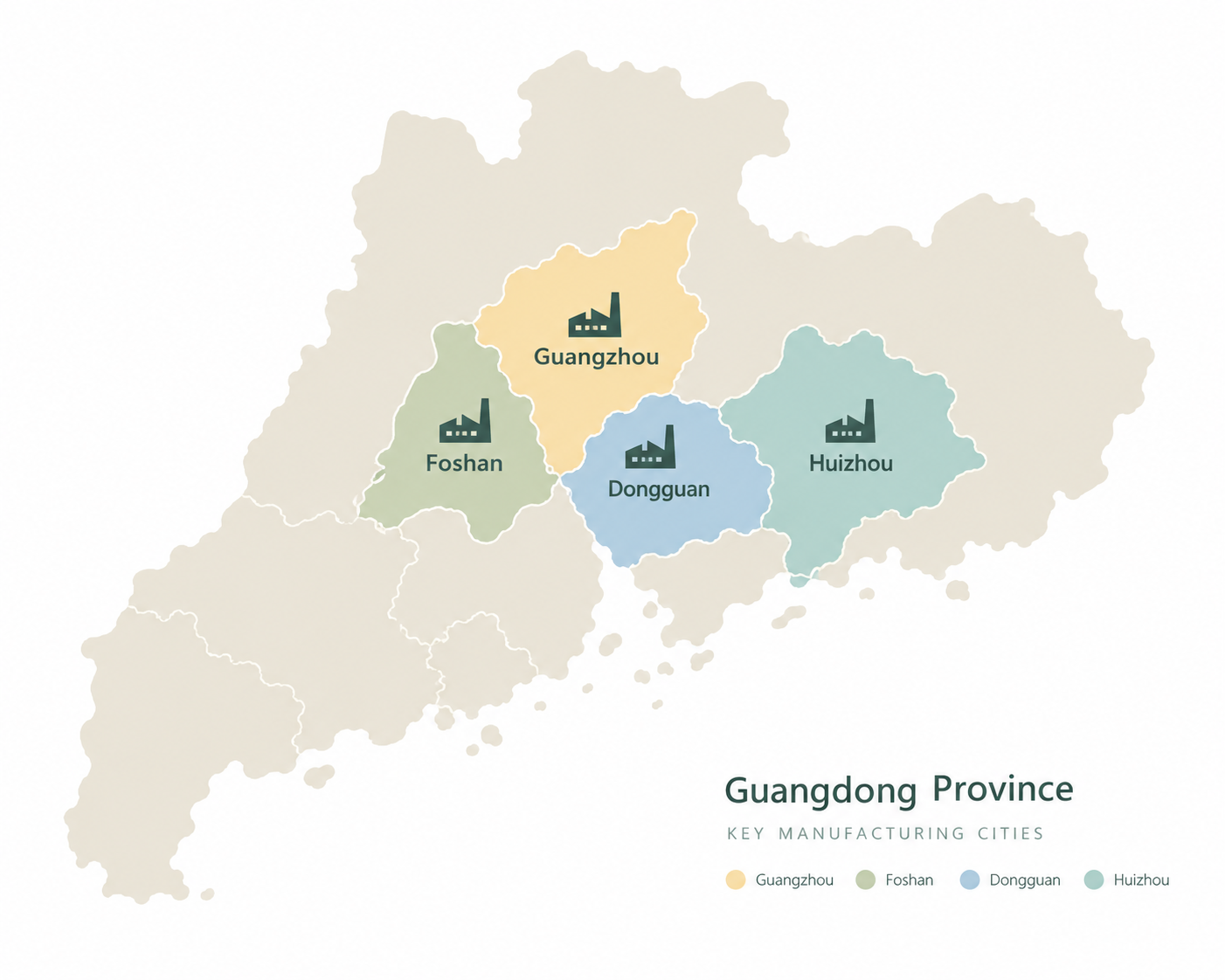
Guangdong's personal-care and household-chemistry production is not concentrated in one place. It sits in a handful of industrial belts, each with its own specialisation and logistics profile. Buyers who understand this geography can cut travel time dramatically and visit more relevant plants per day.
Broadly, you will encounter:
- Guangzhou and the surrounding districts — dense, well-connected, heavy on trading companies, filling and packing operations, and smaller contract manufacturers. Good for packaging, labels and fast-turnaround assembly.
- Foshan and neighbouring industrial towns — a mix of chemical blending, plastic moulding and container-adjacent logistics. Often where you find bottle and cap suppliers sitting near formulators.
- Dongguan and the Shenzhen periphery — strong in packaging, tooling and export-facing operations with mature documentation habits.
- The eastern belt toward Huizhou and beyond — larger-scale chemical and raw-material activity, plus access to port infrastructure.
Do not treat these as fixed rules. Cluster specialisations shift, and a supplier's actual capability is what matters. But as a planning tool, grouping your shortlist by geographic belt turns a scattered list into a route.
Build a Shortlist That Survives a Site Visit
Before you fly, reduce your Canton Fair list to a realistic number. Most buyers can meaningfully inspect two to three factories per day, and that assumes the plants are close together. If you have twenty contacts, you cannot visit twenty plants. Rank them.
A useful filter is to separate trading companies from actual manufacturers. Both have a place in your supply chain, but they require different questions. A trading company may offer better consolidation, documentation support and multi-category ordering. A manufacturer gives you more control over formulation, batch consistency and private-label development. Decide which you need before the trip, because the site visit agenda differs completely.
Ask each shortlisted contact, in writing, before you travel:
- Which product categories do you produce in-house, and which are outsourced?
- Can I see the production area, not just the showroom?
- Who will be present during the visit — sales only, or also a formulator or QC staff?
- What is the lead time for a sample of my target product?
- What packaging formats do you fill in-house?
Vague answers are themselves information. A supplier who cannot confirm who will attend the meeting is unlikely to be organised about your order.
A Realistic Visit Route and Daily Agenda
Assume you have four to five working days. A workable structure looks like this.
Days 1–2: Guangzhou and immediate surroundings
Start where the density is highest. Use these days for first-round meetings, packaging and label suppliers, and any filling or assembly operations. Because traffic in the core city is heavy, cluster your appointments within one district per half-day rather than crossing the city twice.
Day 3: Foshan or Dongguan
Move outward. These visits typically involve blending and moulding operations. If you are sourcing bottles, caps, pumps or jars alongside the liquid product, this is often where you can see both in one day.
Days 4–5: the eastern belt
Reserve the longer travel for larger-scale operations and, if relevant, a look at how goods move toward port. This is also a good moment to discuss container loading and consolidation with suppliers who ship regularly.
Build in slack. A single delayed meeting in Guangdong can cascade through the whole day. One buffer slot per afternoon is not wasted time — it is insurance.
What to Inspect Inside the Plant
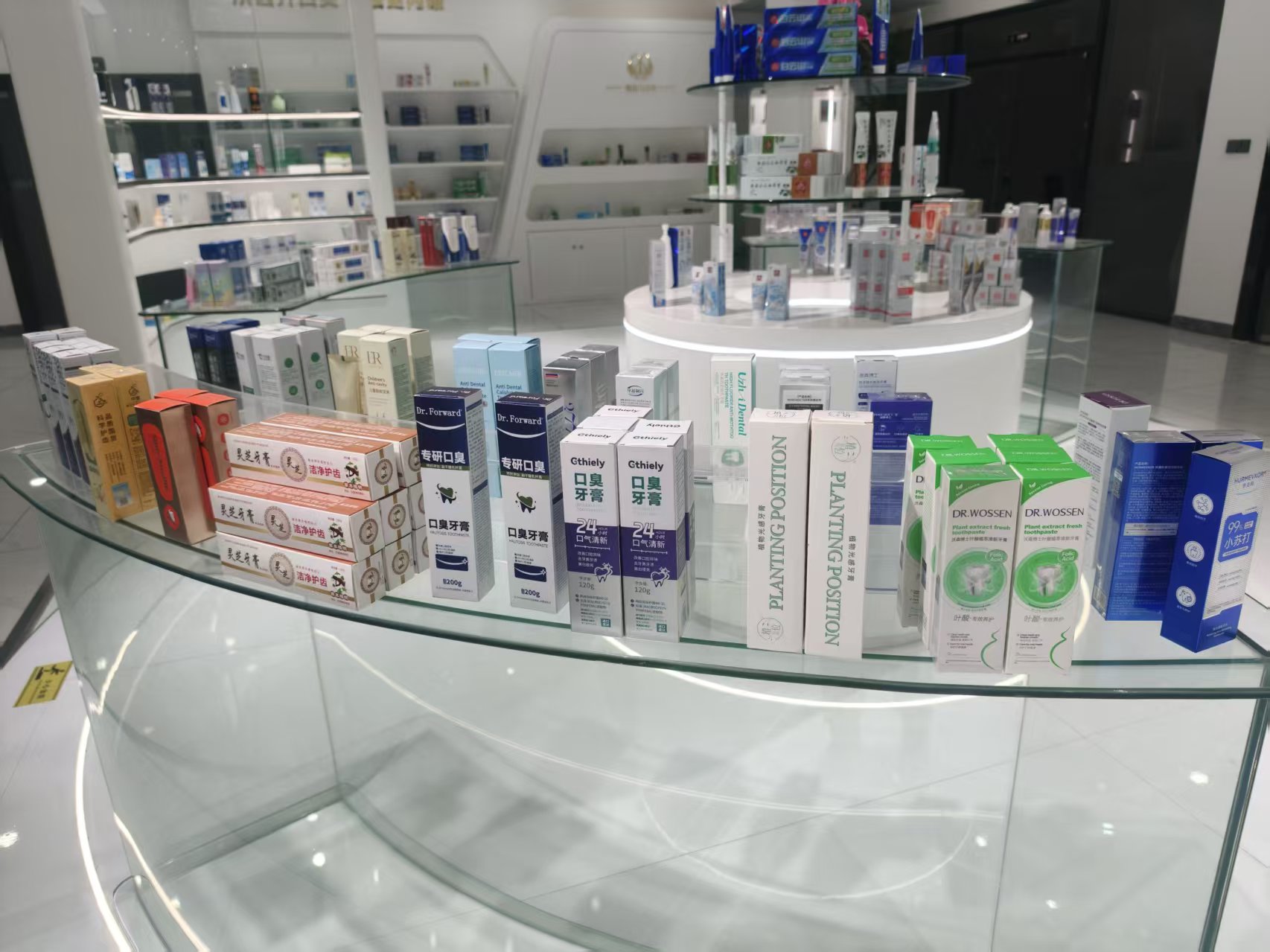
The showroom tells you what a supplier wants you to see. The production floor tells you what they can actually do. Walk the line and look for these things.
Material flow and separation
Raw materials, in-process batches and finished goods should be clearly separated. Look for designated quarantine areas for incoming materials and for finished goods awaiting release. If everything is piled in one space, batch traceability is going to be a problem.
Water treatment and cleaning
Daily-chemical production depends on water quality and on cleaning between batches. Ask how mixing vessels and filling lines are cleaned between products, especially when you are moving from one fragrance or colour to another. This is where cross-contamination shows up in your finished goods.
Filling and sealing accuracy
Watch a filling run if you can. Check whether fill weights are verified, whether caps and pumps are torqued consistently, and whether there is an inline check for leaks. Ask how the line handles a changeover to a different bottle format.
In-house versus outsourced testing
Ask which tests are done on site and which are sent to third-party laboratories. Do not assume — ask. Request the latest test documentation during sampling and confirm it matches the specification you are buying against.
Warehouse and humidity control
Guangdong is humid. Poorly controlled storage affects powders, surfactants and finished goods alike. Look at ventilation, pallet height and whether cartons sit directly on the floor.
Questions That Reveal Batch Consistency
Quality consistency across batches is the single most common complaint buyers raise after the first order. It is also the hardest thing to judge from a sample, because a sample is usually made carefully. Use the site visit to probe the system behind the sample.
- How do you retain and reference a golden sample for each SKU?
- What happens if a batch falls outside specification — is it reworked, blended or rejected?
- How is fragrance dosed, by weight or by volume, and who verifies it?
- How do you record batch numbers, and can you trace a finished carton back to a raw-material lot?
- What is your change-control process if I ask to adjust viscosity, colour or scent strength?
Listen for process language rather than reassurance. A supplier who talks about records, tolerances and release procedures is describing a system. A supplier who only says "no problem" is describing optimism.
Sampling, MOQ and Documentation — Close the Loop Before You Leave
The end of a factory visit is the most valuable hour of the trip, because you are standing in front of the people who can actually commit. Use it to lock down the commercial and compliance details while you are still in the room.
Confirm in writing, ideally before you leave the building:
- The exact sample you will receive, the format, and the expected sampling lead time.
- Confirm the current MOQ and lead time with our sales team, since these vary by product, packaging format and order configuration.
- Which packaging and labelling options are produced in-house and which are subcontracted.
- The export documents the supplier normally provides, and which ones you must arrange yourself.
- Who your day-to-day contact will be once the order is placed — not just the salesperson who hosted you.
If you are consolidating several suppliers into one container, raise it now. Ask how goods would be collected, how cartons would be marked, and who is responsible if one supplier's production slips and the container has to wait. Consolidation is a logistics conversation, but it starts with the supplier's willingness to cooperate.
Finally, take photographs of samples, packaging, carton markings and the production area — with permission. A photo of a filling line next to your notes will be far more useful three months later than a memory of a busy afternoon.
Turning Visits into a Repeatable Sourcing Process
The trip after the Canton Fair is not a one-off. The buyers who get the most from Guangdong treat factory visits as a repeatable routine: shortlist by cluster, inspect the line rather than the showroom, probe batch control, and close the loop on sampling and documentation before leaving. Do that consistently and your supplier base becomes a genuine asset rather than a list of contacts you keep meaning to follow up with.
Planning your next sourcing trip or ready to move from shortlist to sample? Review our daily-chemical and household consumables range, then send us your specification and target market so we can confirm sampling, MOQ and lead time for your project.